
An architectural style is defined by a set of aesthetic norms and canons — a coherent system of visual and spatial principles that gives buildings their recognizable character. What makes a building Gothic is not any single feature but the convergence of pointed arches, ribbed vaults, flying buttresses, and vertical emphasis. What makes a building Minimalist is not the absence of ornament alone but the deliberate reduction of every element to its essential form, the careful articulation of mass and void, and the expression of materials in their most honest state.
My own aesthetic preference is for Minimalism — for sobriety in buildings. I find that the most powerful architectural spaces are often the simplest: spaces where nothing is superfluous, where every surface and every proportion has been considered, where light and shadow do the work that ornament would otherwise do. Minimalism is not poverty of means. It is discipline of means — the hardest discipline in architecture because it leaves no ornament to hide behind.

Architecture Styles: Complete Guide to Every Architectural Style from Ancient to Contemporary
Every epoch has its predominant architectural style — and those styles evolve. The Gothic arose from the structural ambitions of medieval builders and the theological aspirations of the Church. The Baroque arose from the Counter-Reformation’s need for emotional persuasion. Modernism arose from the social and technological revolutions of the early 20th century. Contemporary architecture arises from the convergence of digital fabrication, sustainability imperatives, and globalized culture. Each style is legible, in retrospect, as the architectural expression of its time.
The most frequent architectural style mistake is attempting to create a building without a clear aesthetic identity — mixing elements from multiple styles without the conviction or the knowledge to make those combinations coherent. The result is a building that looks like nothing in particular. It borrows a Gothic arch here, a Modernist flat roof there, Mediterranean tile somewhere else, and achieves only the impression of confusion. A building with a clear architectural style — even an unfashionable one — is always more interesting than one without any.
| 🏗️ | Every great architectural style has been, at some point, a radical departure from what came before it. The flat roofs and white walls of Modernism were shocking to eyes accustomed to historicist ornament. The exposed concrete of Brutalism was provocative. The parametric curves of contemporary digital architecture challenge every Cartesian intuition. What distinguishes a style from a mere fashion is coherence — the sense that its visual principles arise from a deeper set of ideas about space, material, structure, and human life. |
What Defines an Architectural Style?
An architectural style is defined by a consistent set of aesthetic norms and canons — visual and spatial principles that recur across buildings of that style regardless of their location, size, or specific function. Those canons typically address:
- Form and massing: the three-dimensional shape of the building, the relationship between solid and void, the profile against the sky
- Structural expression: whether structure is hidden behind finish surfaces or expressed as the primary aesthetic element
- Ornament: whether surfaces are decorated and by what means, from carved stone capitals to applied tile to the complete elimination of ornament
- Materials: whether specific materials are characteristic of the style, and whether they are used honestly or as applied surface treatments
- Proportional systems: the mathematical relationships between elements — column heights, window widths, facade divisions — that give buildings their visual coherence
- Spatial organization: how spaces are sequenced, how they relate to each other, how the building mediates between interior and exterior
- Relationship to context: whether the building asserts itself against its surroundings or seeks continuity with them
A building belongs to a style not when it checks every canonical box but when its overall character is legibly shaped by those canons. Architecture styles are not rigid formulas but families of related approaches united by shared principles.
The Major Architecture Styles: A Complete Guide
Ancient and Classical Styles
| CLASSICAL GREEK ARCHITECTURE · 700–146 BCE |
| Defining canons: The three orders (Doric, Ionic, Corinthian), colonnaded facades, trabeated structure (post and lintel), mathematical proportion, bilateral symmetry
Key examples: Parthenon (Athens), Temple of Hephaestus (Athens), Temple of Concordia (Agrigento) US market: Foundation of Neoclassical revival; widely used in US government buildings and institutions |
| ROMAN ARCHITECTURE · 509 BCE–476 CE |
| Defining canons: The arch, vault and dome, concrete construction, orders applied decoratively, monumental civic scale, utilitarian infrastructure
Key examples: Pantheon (Rome), Colosseum (Rome), Roman aqueducts US market: Arches, domes, and concrete all derive from Roman innovation; direct ancestor of Renaissance architecture |
| GOTHIC ARCHITECTURE · 12th–16th Century |
| Defining canons: Pointed arch, ribbed vault, flying buttress, vertical emphasis, large stained glass windows, stone tracery, soaring interior heights
Key examples: Notre-Dame de Paris, Chartres Cathedral, Westminster Abbey US market: Gothic Revival popular in US 19th century churches and university buildings (Yale, Princeton) |
| RENAISSANCE ARCHITECTURE · 15th–17th Century |
| Defining canons: Revival of classical orders, mathematical harmony, bilateral symmetry, rusticated facades, classical pilasters and entablatures, domed churches
Key examples: Brunelleschi’s Duomo (Florence), Palazzo Rucellai, St. Peter’s Basilica US market: Neoclassical architecture in US derived largely from Renaissance interpretation of antiquity |
| BAROQUE ARCHITECTURE · 17th–18th Century |
| Defining canons: Dramatic movement, emotional intensity, curved forms, rich ornament, theatrical use of light, integration of painting and sculpture, grand spatial sequences
Key examples: St. Peter’s Square (Rome), Palace of Versailles, St. Paul’s Cathedral (London) US market: Spanish Colonial Baroque influential in US Southwest and Latin America; Beaux-Arts derives from Baroque tradition |
American Historical Styles
| COLONIAL ARCHITECTURE · 1600s–1780s |
| Defining canons: Symmetrical facades, central entry, double-hung windows, steep gabled roofs, brick or wood clapboard, minimal ornament, Dutch Colonial variations in Northeast
Key examples: Colonial Williamsburg, early New England meetinghouses, Dutch barns of the Hudson Valley US market: Colonial Revival remains one of the most popular residential styles in the US today, particularly in the Northeast |
| FEDERAL / NEOCLASSICAL · 1780s–1850s |
| Defining canons: Classical orders applied to democratic institutions, symmetrical facades, columned porticoes, domed public buildings, Palladian influence
Key examples: US Capitol Building, Virginia State Capitol (Jefferson), Monticello US market: The defining style of American civic architecture; still used for courthouses and government buildings |
| VICTORIAN ARCHITECTURE · 1837–1901 |
| Defining canons: Elaborate ornament, asymmetrical massing, steep roofs, towers and turrets, decorative woodwork (gingerbread), stained glass, mixed materials and colors
Key examples: Painted Ladies of San Francisco, Victorian neighborhoods of Louisville and Portland US market: Victorian homes remain prized in US urban markets; restoration is a significant architectural specialty |
| CRAFTSMAN / ARTS AND CRAFTS · 1880s–1930s |
| Defining canons: Handcrafted materials, exposed structural elements (rafter tails, brackets), low-pitched roofs, wide overhanging eaves, front porches, natural materials, integration with landscape
Key examples: Gamble House (Pasadena, Greene & Greene), Stickley furniture, Prairie School in Chicago US market: Craftsman bungalows remain highly desirable in US residential market, especially in California and Pacific Northwest |
Modern Architecture Styles
| MODERNISM · 1920s–1970s |
| Defining canons: Rejection of historical ornament, expression of structure and function, flat roofs, horizontal windows, open floor plans, machine aesthetics, ‘form follows function’
Key examples: Villa Savoye (Le Corbusier), Farnsworth House (Mies van der Rohe), Fallingwater (Frank Lloyd Wright) US market: The defining style of 20th century US commercial and institutional architecture; still influential |
| INTERNATIONAL STYLE · 1932–1970s |
| Defining canons: Glass and steel curtain walls, pilotis (columns lifting building off ground), flat roofs, open interior plans, no ornament, universal application regardless of climate or context
Key examples: Seagram Building (Mies, NYC), Lever House (SOM, NYC), United Nations Headquarters US market: Dominant style of mid-century US office towers; revived in high-end contemporary residential |
| BRUTALISM · 1950s–1980s |
| Defining canons: Exposed raw concrete (béton brut), massive geometric forms, expressive structural systems, monumental scale, rejection of traditional beauty, social idealism
Key examples: Barbican (London), Boston City Hall, Paul Rudolph’s Yale Art and Architecture Building US market: Controversial in US; many Brutalist buildings are threatened with demolition while others are gaining landmark protection |
| POSTMODERNISM · 1970s–1990s |
| Defining canons: Historical references applied ironically, playful ornament, bright colors, classical elements out of scale, rejection of Modernist austerity, plurality and eclecticism
Key examples: AT&T Building (now 550 Madison, Philip Johnson), Piazza d’Italia (Charles Moore), Portland Building US market: Largely rejected in critical discourse but widely popular in US suburban commercial development of the 1980s-90s |
| DECONSTRUCTIVISM · 1980s–present |
| Defining canons: Fragmented forms, non-rectilinear geometry, apparent instability, conflict between structure and envelope, rejection of harmony and symmetry
Key examples: Guggenheim Bilbao (Gehry), Jewish Museum Berlin (Libeskind), MAXXI Rome (Zaha Hadid) US market: Confined to signature buildings and cultural institutions; rare in US residential market |
Contemporary Styles
| MINIMALIST ARCHITECTURE · 1980s–present |
| Defining canons: Reduction to essential elements, clean surfaces, restrained material palette, precise detailing, expressive use of light and shadow, sobriety of form, no superfluous elements
Key examples: John Pawson’s Novy Dvur Monastery, Tadao Ando’s Church of Light, Alberto Campo Baeza’s work US market: The most sought-after aesthetic in US luxury residential today, particularly in California, New York, and Miami markets |
| CONTEMPORARY ARCHITECTURE · 2000s–present |
| Defining canons: Not a single style but the sum of current architectural production: clean lines, open plans, large glazing, indoor-outdoor connection, sustainable systems, integration of technology
Key examples: Defined by current production rather than a canon; varies significantly by region and architect US market: The dominant category in US new residential construction; clients and brokers use ‘contemporary’ to describe any new-construction aesthetic |
| BIOPHILIC / ORGANIC ARCHITECTURE · 2010s–present |
| Defining canons: Integration of natural materials (wood, stone), living walls and green roofs, natural light and ventilation, curved organic forms, visual connection to nature, biomimicry
Key examples: Amazon Spheres (Seattle), Bosco Verticale (Milan), Singapore’s Gardens by the Bay US market: Rapidly growing in US commercial and high-end residential; driven by wellness trends and sustainability requirements |
Modern vs. Contemporary Architecture: The Difference
Modern and contemporary are the two most frequently confused terms in architectural styles, and the confusion is understandable: both refer to ‘new’ or ‘recent’ in ordinary language. In architecture, however, they refer to entirely different things.
| Modern Architecture | Contemporary Architecture |
| A specific historical style — 1920s to 1970s | A period description — architecture being produced now |
| Defined by a specific aesthetic canon | Not defined by a single canon — encompasses many current styles |
| Flat roofs, horizontal windows, no ornament | Variable — clean lines but no single defining feature |
| Associated with Le Corbusier, Mies, Gropius | Associated with current architects working today |
| Can be replicated — a new ‘Modern’ house is possible | Cannot be replicated — it is always the present moment |
| Rejection of historical styles | Often incorporates historical references selectively |
| Example: Farnsworth House (1951) | Example: any well-designed house completed in 2025 |
When a US client says they want a ‘modern’ house, they almost always mean contemporary — clean lines, open plan, large windows, neutral palette. When an architectural historian says ‘Modern,’ they mean the specific style produced between approximately 1920 and 1970. Understanding which one your client means is the first clarifying question in any residential design process.
Architecture Styles in the US Market Today
The most sought-after architectural styles in the US residential market today are dominated by modern and minimalist aesthetics — what the market generally calls ‘contemporary.’ That preference reflects broader cultural trends: the rejection of the ostentatious excess of 1990s McMansions, the influence of Scandinavian and Japanese minimalist design through social media, and the practical appeal of clean, low-maintenance interiors.
| Style | US Market Demand (2025–26) | Primary Markets |
| Contemporary/Modern | Very High — dominant in new construction | All major metros, luxury residential nationwide |
| Minimalist | High and growing — premium positioning | California, New York, Miami, Austin, Pacific Northwest |
| Craftsman/Farmhouse | High — stable popular demand | Suburban residential, Mountain West, Midwest |
| Colonial Revival | Moderate — traditional markets | Northeast, Mid-Atlantic, Southeast suburbs |
| Mediterranean/Spanish | Moderate — regional | Florida, California, Southwest |
| Mid-Century Modern | Growing — especially in renovation | California, Arizona, Palm Springs market |
| Industrial/Loft | Moderate — urban adaptive reuse | Brooklyn, Chicago, Detroit, Portland |
| Scandinavian | Growing — influenced by wellness trends | Pacific Northwest, Colorado, urban markets |
The Most Common Architectural Style Mistake
The most frequent mistake in architectural style is the absence of a clear aesthetic identity — a project that borrows elements from multiple styles without the knowledge or conviction to make those combinations coherent. The result is a building that fully belongs to no style and reads as visual confusion.
This mistake is different from eclectic architecture, which consciously combines elements from multiple styles with skill and intentionality. True eclecticism — practiced by architects like Stanford White in the late 19th century — requires deep knowledge of the styles being combined. The mistake is not the combination but the lack of principle behind it: the Mediterranean roof tile on the Tudor half-timbered facade over the Modernist curtain wall base, assembled without a governing idea.
The antidote is discipline: choose a style or a set of aesthetic principles, understand its canons, apply them consistently, and resist the temptation to add elements that appeal in isolation but undermine the coherence of the whole. A building with a clear architectural style — even an unconventional one — communicates intention. A building without one communicates indecision.
| 🎨 | Personal aesthetic preference matters in architecture — deeply. An architect who genuinely loves the precision of Minimalism will produce better Minimalist buildings than one who is indifferent to it. An architect who is moved by the craftsmanship of the Arts and Crafts tradition will produce better Craftsman buildings than one following a trend. The most important question in choosing an architectural style for a project is not which style is most popular right now but which style the architect and client both understand and genuinely respond to. That authentic connection to the aesthetic is what produces buildings with real character. |
How Architectural Styles Evolve
Every epoch has its predominant architectural style, and those styles evolve — shaped by the available materials and construction technologies of their time, the cultural and intellectual currents of their moment, and the accumulated reactions against whatever came before. Gothic architecture could not have existed without the development of the pointed arch and the flying buttress that freed the wall from structural obligation, allowing it to become a field for stained glass. Modernism could not have existed without steel, reinforced concrete, and the elevator. Contemporary parametric architecture could not exist without digital modeling and computer-controlled fabrication.
Styles also evolve through negation. Modernism arose in part as a reaction against the historicist eclecticism of the 19th century. Postmodernism arose as a reaction against Modernism’s austerity. Minimalism arose as a reaction against Postmodernism’s excess. Each new style defines itself partly by what it rejects — which means understanding the history of architectural styles is essential for understanding why any particular style looks the way it does.
The styles that endure — that are revisited and reinterpreted across centuries — are those with the deepest formal intelligence: Classical, Gothic, Minimalist. The styles that fade are those that were primarily fashionable — tied to a particular cultural moment without deeper architectural logic. Understanding the difference is part of the architectural education that separates architects who produce work with lasting value from those who produce work that looks dated within a decade.
FAQ About Architecture Styles
What is the most popular architectural style in the United States?
The most popular architectural style in US new residential construction today is broadly described as ‘contemporary’ or ‘modern’ — characterized by clean lines, open floor plans, large windows, neutral material palettes, and indoor-outdoor connections. Within that broad category, Minimalism is the premium positioning for luxury residential. For existing housing stock, Colonial Revival and Craftsman remain among the most common styles across suburban America. Regional variations are significant: Mediterranean and Spanish Colonial in California and Florida, Craftsman in the Pacific Northwest, Colonial in the Northeast.
What is the difference between style and vernacular architecture?
Architectural style refers to deliberate aesthetic choices made by trained architects working within a design tradition. Vernacular architecture refers to buildings produced without formal architectural training, using local materials and traditional techniques in response to local climate and cultural practices. Vernacular architecture has its own logic and beauty — the adobe buildings of the Southwest, the wooden farmhouses of New England, the shotgun houses of New Orleans — but it is not defined by the canonical aesthetic principles that characterize formal architectural styles. Many architects study vernacular traditions to inform their stylistic choices.
Can architectural styles be mixed successfully?
Yes — but successfully mixing architectural styles requires deep knowledge of the styles being combined and a clear governing principle that makes the combination coherent rather than arbitrary. The most successful eclectic architecture — practiced by architects like Charles Garnier (Paris Opera) or Stanford White — demonstrates complete mastery of every style deployed. The least successful mixing happens when elements are combined for superficial appeal without understanding what makes each style work. The rule of thumb: if you can articulate why the combination works, it probably does. If you can’t, it probably doesn’t.
This is the pillar page of the Arquinetpolis Architecture Styles Guide. Explore the articles below to go deeper into any specific style — from Minimalism and Brutalism to Mid-Century Modern and Contemporary architecture.

Industrial Architecture Style: Definition and Materials

Contemporary Architecture: Definition and Characteristics

Brutalist Architecture: What It Is, Why It Divides Opinion
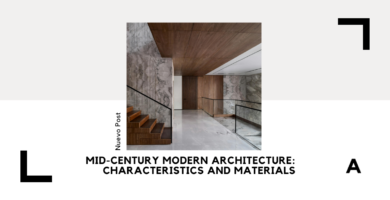
Mid-Century Modern Architecture: Characteristics and Materials

Minimalist Architecture: Principles and Materials
Questions about architectural styles or which style is right for your project? Leave a comment — we read and respond to every one.